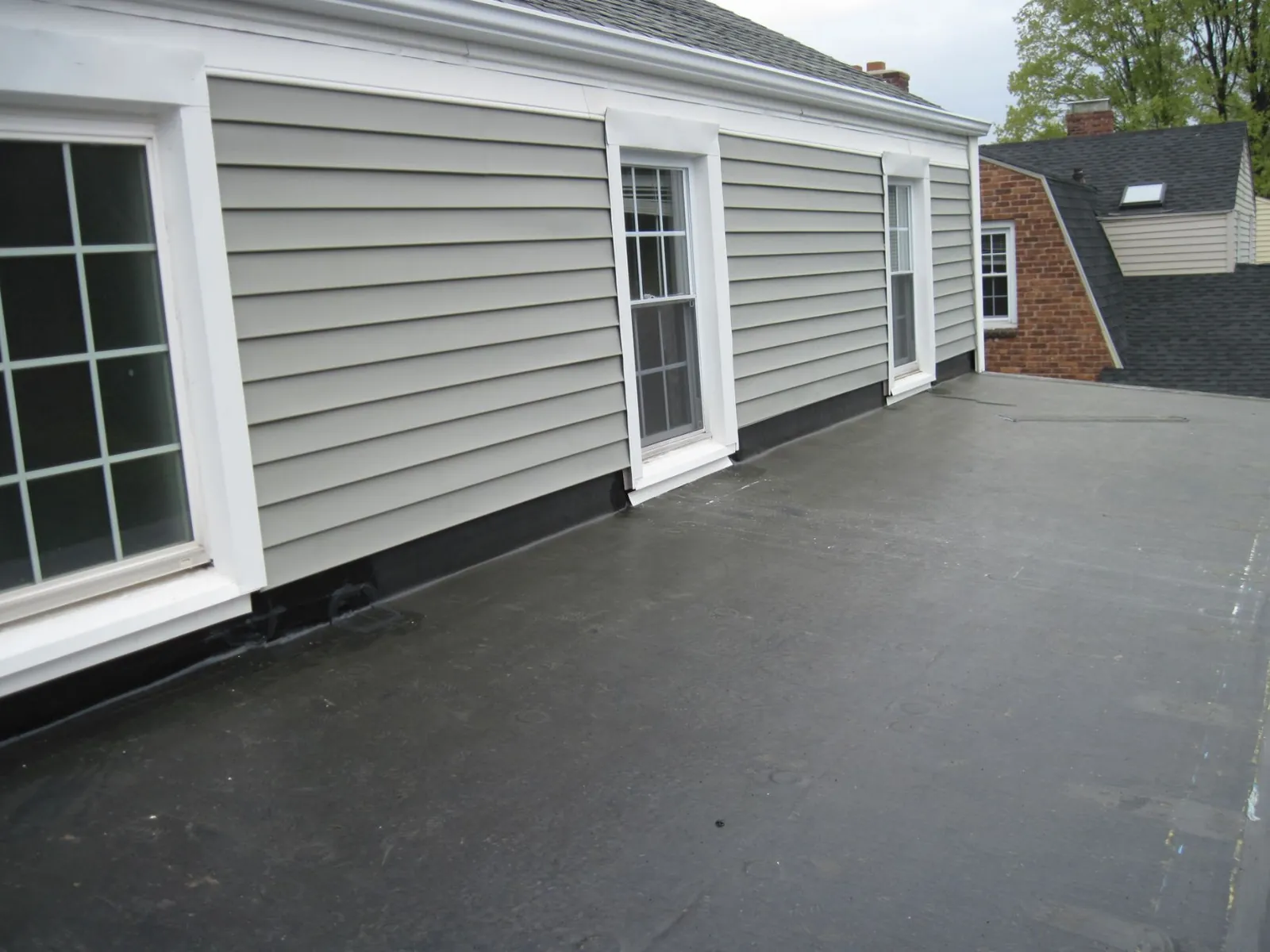
Ponding water
Water that stays on the roof for a day or more after rain can shorten the life of the membrane.
Low-slope roofs drain differently, so they need different materials and detailing. We install and repair TPO and EPDM membranes on additions, porches, dormers and commercial buildings.
Overview
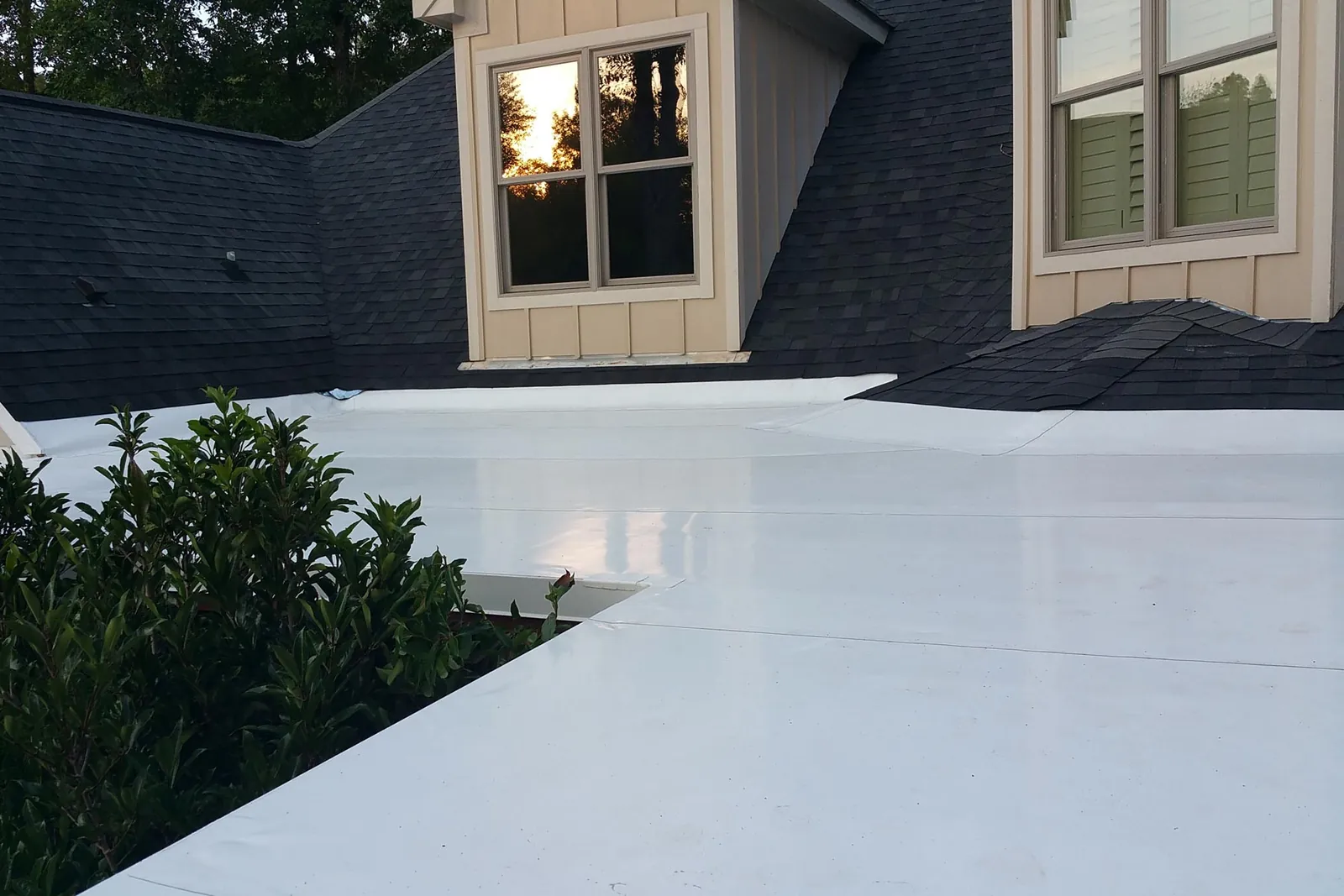
Flat and low-slope roofs are common on home additions, porch roofs, and commercial, retail and industrial buildings. Because water drains slowly, seams, edges and penetrations have to be detailed carefully.
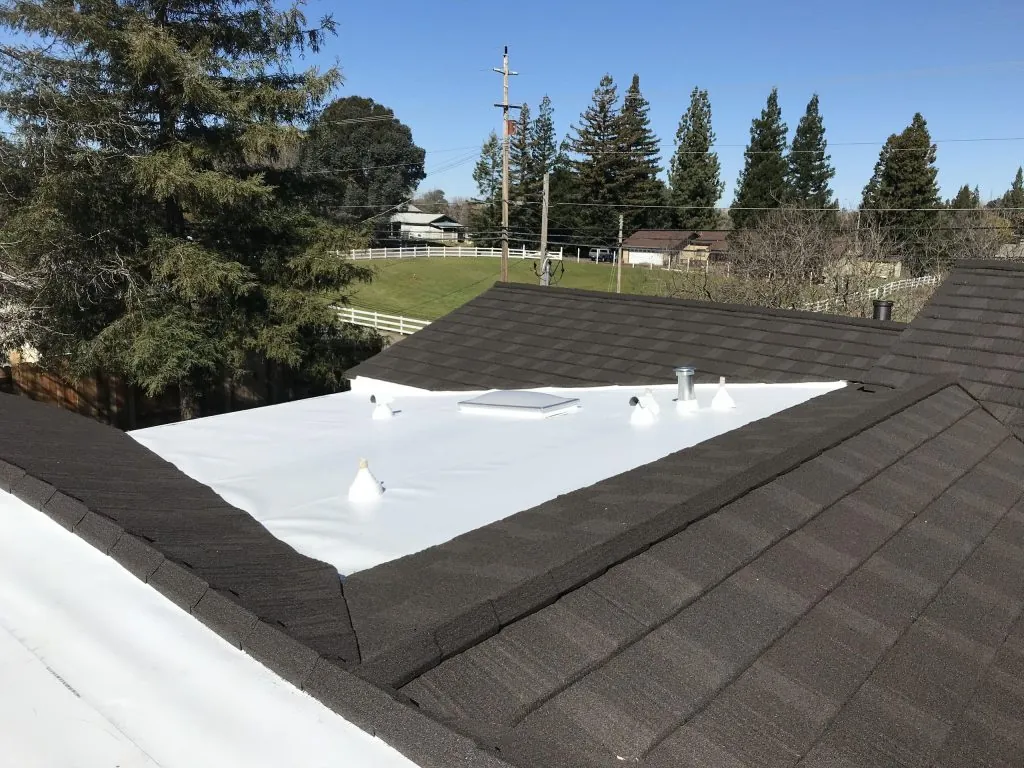
We work with the two membrane systems most used on low-slope roofs: TPO, the light-colored reflective membrane, and EPDM, the black rubber membrane with a long track record.
Warning signs
Water that stays on the roof for a day or more after rain can shorten the life of the membrane.
Seams that separate let water under the membrane.
Surface damage that exposes the layers below the membrane.
Vents, pipes, skylights and drains are the most common leak points.
Options
Both are single-ply membranes. The right choice depends on your building and budget.
How it works
We look at the roof and the areas around it, and talk through what we find before anything is priced.
We measure, look at drainage and penetrations, and recommend a system.
We prepare the substrate, install the membrane and seal edges, seams and penetrations.
We tell you what to check and how often, so small issues get caught early.
Honest considerations
Questions
TPO is a single-ply reflective membrane, usually white, that resists UV, chemicals and punctures. Its seams are heat-welded, and it is popular on commercial and industrial roofs.
EPDM is a black synthetic rubber membrane known for its flexibility in extreme temperatures and a long track record. It can last 20 to 30 years with maintenance.
Often yes. Many flat roof leaks come from a failed seam, flashing or penetration. We find the source before recommending a repair or replacement.
Both. Flat roofs are common commercially, and we also do them on home additions, porches and dormers.
Inspections and estimates are free. Tell us what you are seeing, or call and talk to someone now.